



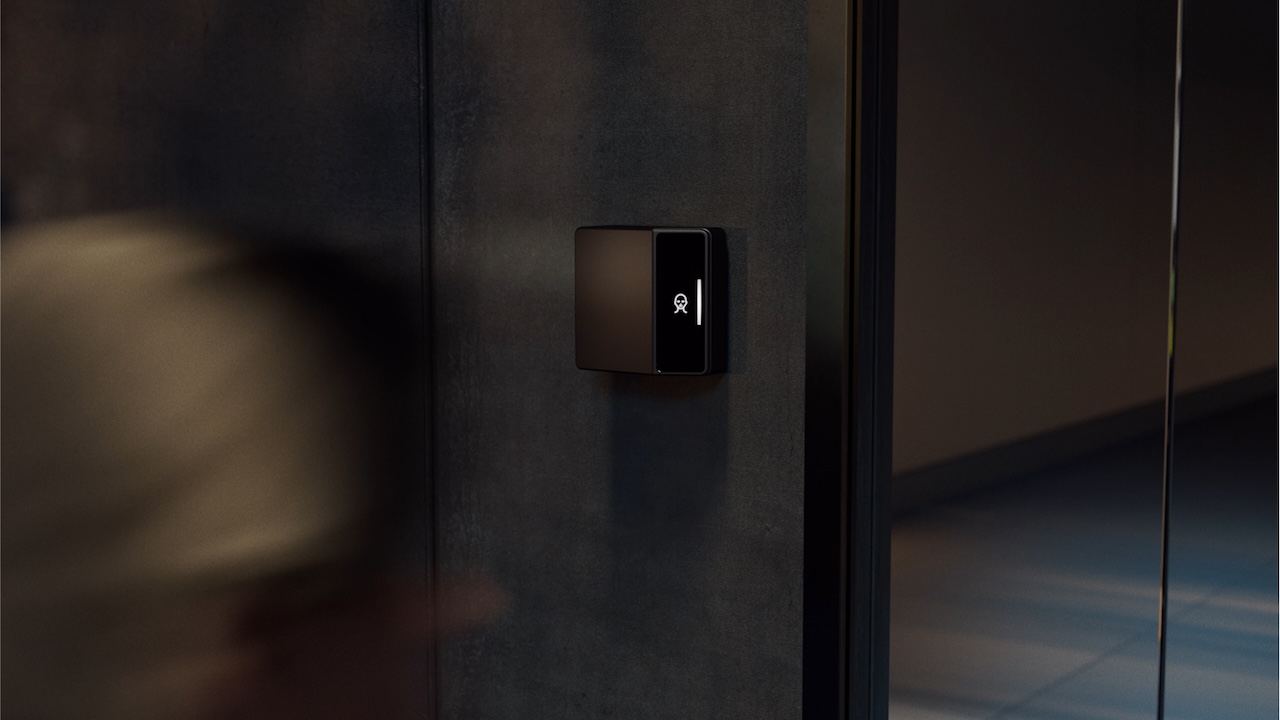
Alcatraz, an AI-powered physical access control company, has raised $50 million in a Series B round, pushing its total capital past $100 million. BlackPeak Capital, Cogito Capital, and Taiwania Capital led the deal, with existing backers Almaz Capital, EBRD, Ray Stata, and others also participating.
The company’s growth numbers give a sense of why investors showed up. In 2025 alone, Alcatraz reported more than 300% year-over-year growth in data center adoption, 200% growth in new enterprise customers, and a fivefold expansion across Fortune 500 deployments. Its client list spans major U.S. airports, energy companies, NFL teams, top universities, and some of the largest AI data centers in operation today.
The Problem Badges and PINs Can’t Solve
Physical security has a trust problem that the industry doesn’t talk about enough. Badges get lost. PINs get shared. And most facial biometric systems on the market were built around surveillance logic — they tie an employee’s identity to stored photographs, creating exactly the kind of centralized data that attracts breaches. Employees often don’t know it’s happening. Regulators are starting to pay attention.
Alcatraz was built on a different premise entirely. Its system authenticates without storing. No photographs. No biometric images in the cloud. Employees enroll voluntarily, can delete their data at any time, and the platform is designed from the ground up to meet GDPR, CCPA, BIPA, and related compliance requirements.
Authentication, Not Surveillance
The distinction between facial authentication and facial surveillance sounds technical, but it’s actually quite simple. Facial surveillance matches images against a stored database. Facial authentication, the approach Alcatraz uses, just confirms that the person walking in is who they claim to be and then discards that information entirely.
The Rock™, the company’s flagship device installed at building entry points, does this as a person walks through at normal speed. No stopping, no swiping, no badge to misplace. A useful analogy: facial recognition is a surveillance camera with a long memory. Facial authentication is a lock that recognizes your key, then forgets it the moment the door opens.
“We are the only biometric system protecting physical spaces using facial authentication instead of the legacy facial surveillance use case,” says Tina D’Agostin, CEO of Alcatraz. “Like Face ID on your iPhone, no photographs are being taken. No personal data is being stored.”
“Four-digit passcodes and badges were designed for a different era,” adds Ray Stata, one of the company’s largest investors. “Companies are realizing they need security that is tied to the person, not to a piece of plastic. With Alcatraz, every time an employee walks through the door, our AI-powered technology is learning and adapting — not relying on a photograph taken years ago on their first day.”
Where the Funding Goes
The new capital will go toward expansion into new verticals and international markets, along with team growth. Two sectors are getting particular attention.
On the airport side, Safe Skies, funded by the FAA, recently certified the Rock™ as reliable, secure, and effective for high-security airport environments, opening a significant new revenue channel. On the data center side, timing is everything. The largest technology companies in the world are pouring hundreds of billions into AI computing infrastructure, and the facilities housing that equipment have become some of the most sensitive physical sites on the planet. Physical security spending at data centers is projected to grow substantially in the years ahead.
“We are the guardians of AI,” says Vince Gaydarzhiev, founder of Alcatraz. “The data centers we protect aren’t just buildings. They are the infrastructure that the entire digital economy runs on.”
Founded by the Engineer Behind Apple Face ID
Gaydarzhiev started Alcatraz in 2016 after leading hardware prototyping for iPad and iPhone at Apple during the development of Face ID. The question he kept coming back to was a simple one: if a phone could authenticate its owner without storing their face, why couldn’t a building do the same?
“I saw firsthand how powerful this technology could be when it was built with privacy at the center,” he says. “The idea was to bring that same approach to the physical spaces where people work. Now we protect the top AI data centers in the world. If AI is the engine powering the next era of innovation, security has to be the foundation beneath it. This funding accelerates our ability to build that foundation at global scale.”
D’Agostin frames the company’s position just as directly: “We are the Face ID of securing physical spaces. The world’s largest airports, energy companies, and the world’s most critical data centers all trust Alcatraz. Our technology is AI-powered and completely anonymized. For the workplace of today, badges and passcodes inherently invite too much risk.”
Investors and Funding History
The Series B was led by three firms with a clear track record of backing infrastructure and deep tech at scale. BlackPeak Capital is a growth equity firm focused on technology businesses across Asia and emerging markets. Cogito Capital invests in frontier technology with a strong emphasis on AI and defense-adjacent sectors. Taiwania Capital, backed by the Taiwanese government, has built a portfolio around semiconductors, hardware, and next-generation computing infrastructure. Together, they bring more than just capital to a company operating at the intersection of AI and physical security.
Returning investors Almaz Capital, EBRD, and Ray Stata also participated in the round. Stata, co-founder of Analog Devices and one of the most respected figures in hardware and semiconductor history, has been a vocal supporter of the company’s approach from early on. His continued backing carries weight in an industry that tends to take notice when engineers of his caliber put their name behind something.


