



Most people assume healthcare’s biggest problems happen in the exam room. Basata, an AI company based in Phoenix, thinks the real failures happen long before a patient ever sees a doctor. The company builds AI agents that handle administrative tasks still being done by fax and phone: processing referrals, scheduling appointments, managing patient intake, and following up on outstanding tasks. When a referral arrives by fax, Basata reads it, pulls the patient details, creates a record in the electronic health record system, and has an AI voice agent call the patient to book an appointment. The whole process takes minutes.
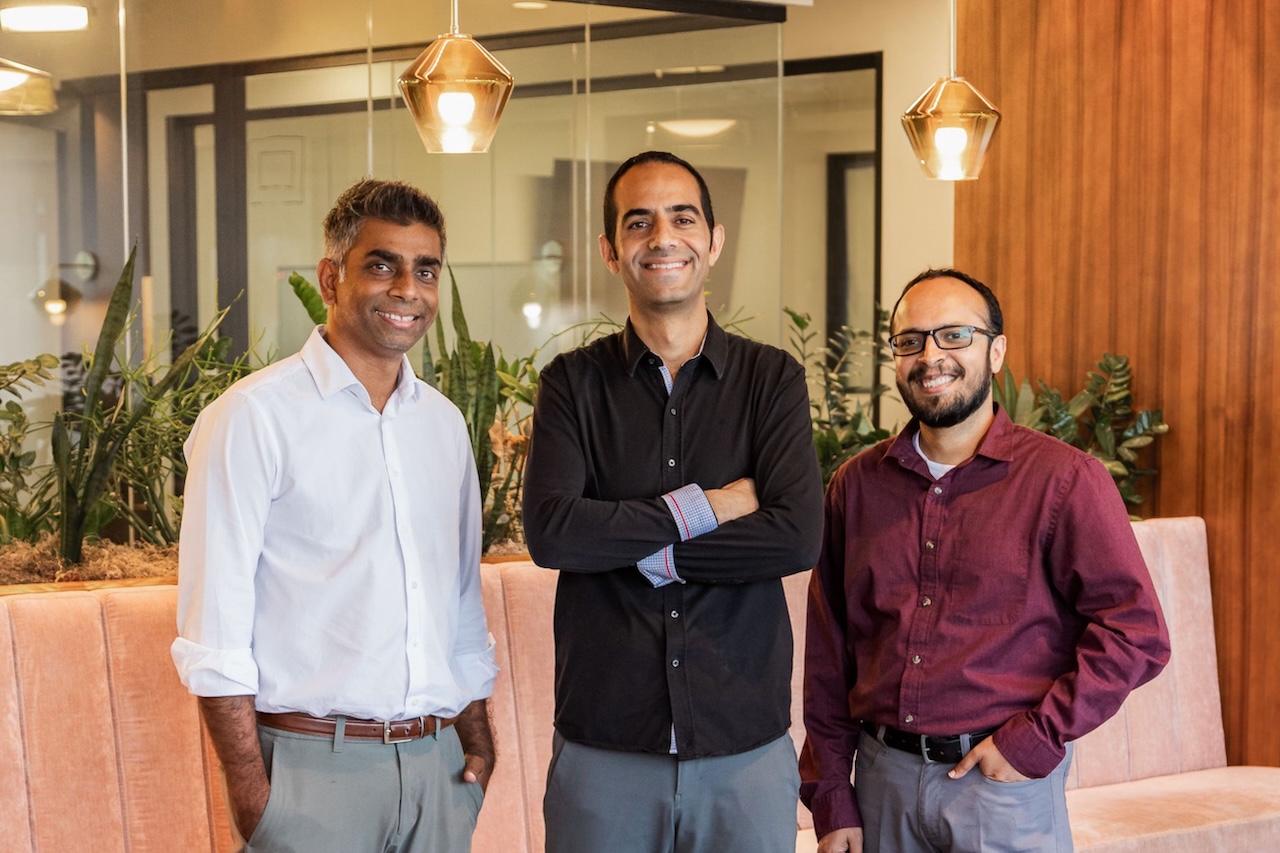
The company was founded by Kaled Alhanafi, Chetan Patel, and Vivin. Each of the three came to this problem through personal experience rather than market research, a point the team talks about openly and that shapes how the product is built.
Basata announced a $21 million Series A. The round was led by Basis Set Ventures, with additional participation from Cowboy Ventures, PHX Ventures, Zenda Capital, and Victoria Treyger. Total funding now stands at $24.5 million.
Why Healthcare Administration Has Become Its Own Industry
Administrative work in US healthcare has grown to a scale that is difficult to fully grasp. The country spends over $1,000 per person annually on healthcare administrative costs, which is roughly five times more than the average of other wealthy nations. For physicians, that translates into an average of 15.6 hours of administrative work per week, nearly two full working days spent on tasks that have nothing to do with treating patients.
Hospital administrative expenditures grew 87.2% between 2011 and 2023, a rate that outpaced growth in direct patient care spending over the same period. The volume of work has simply outgrown the systems built to handle it.
Specialty practices feel this most acutely. A cardiology group may receive hundreds of referrals every week. Processing each one means entering data by hand, making phone calls, coordinating across scheduling systems, and ensuring records are updated correctly. These tasks are time-consuming by nature, and when staff are stretched thin, referrals pile up. Patients wait weeks, sometimes months, to be contacted. Some fall through entirely.
The Personal Stories Behind the Company
Basata’s founding team did not arrive at this problem through a consulting report. CEO Kaled Alhanafi lost his mother to a healthcare administrative error when he was a young adult. Co-founder Chetan Patel, a former engineer at Medtronic, watched his wife spend months trying to get an appointment with a cardiologist. Co-founder Vivin’s wife went through the same experience with the referral process.
Those stories are well-documented in the company’s public communications, and they explain why the team approaches the product the way it does. Basata sends forward-deployed engineers to work on-site at customer practices, spending days manually processing referrals and faxes alongside administrative staff. It is an intensive and costly method of product development. It also means the product is built around how the work actually happens, not how it looks from the outside.
How Basata Plans to Use the New Funding
The $21 million will go toward expanding Basata’s operations across more specialty groups and building out coverage of the full administrative workflow from end to end. The company wants to replace the mix of disconnected tools that most practices currently rely on with a single system that handles intake, scheduling, coordination, and billing through AI agents running in the background.
“It’s 2026, self-driving cars can navigate my city, but patients still have to fight through hold music and fax machines to get care,” said Kaled Alhanafi, co-founder and CEO of Basata. “That’s the disconnect we’re fixing. In the next decade, healthcare operations will become fully autonomous. Intake, scheduling, coordination, and billing will just happen in the background, and patients will finally experience what exceptional healthcare actually feels like.”
What Basata Does and How It Works
The name Basata is Arabic for simplicity. The company builds specialty-specific AI agents, meaning the software is configured for the particular workflows of cardiology, urology, gastroenterology, ophthalmology, and similar fields rather than being a generic tool applied across all of healthcare. The agents read incoming faxes, extract patient and insurance information, create charts in the EHR, place outbound calls to patients via AI voice agents, and complete the booking.
Importantly, the system connects to the infrastructure practices already use rather than requiring them to switch platforms. That lowers the barrier to adoption and reduces disruption for staff.
The reported results from current customers are notable. Practices using Basata process 100% of incoming referrals on the same day they arrive. They report a 50% increase in administrative capacity, and the average time from referral to first patient contact has dropped from weeks to minutes. The company has served more than 500,000 patients to date, with 100,000 of those in the past month. About 70% of new sales come through referrals from existing customers.
“Before Basata, we regularly had a backlog of 500+ unprocessed referrals, some waiting for months,” said Rich Bondi, CEO of Southwest Cardiovascular Associates. “Once Basata came in, the backlog went to zero. We’ve seen an 18% boost in new patient conversions because patients are contacted right away. Basata truly transformed our patient care.”
The Investors Behind the Round
Basis Set Ventures led the Series A. The Silicon Valley firm was founded in 2017 and focuses on AI, automation, and infrastructure. It closed a $185 million third fund in February 2024. Co-investors in this round include Cowboy Ventures, PHX Ventures, Zenda Capital, and Victoria Treyger.
Before this raise, Basata had taken in $3.5 million in an earlier round. The current investor group spans both healthcare-focused and generalist AI funds, reflecting Basata’s positioning at the intersection of the two.


