



Orbital Industries, a London-based company that uses AI to design and manufacture industrial hardware, has raised $50 million in a Series B funding round. The company is working on a specific problem: the physical limits of cooling and deployment in AI data centres. CEO Jonathan Godwin has spent nearly a decade in AI research, including five years at DeepMind working on AI for science, engineering, and advanced materials design. The company’s bet is that solving these physical constraints requires building the hardware itself, not writing software for someone else to use.
The market context matters here. According to MarketsandMarkets, the AI data centre market is projected to grow from $236 billion in 2025 to nearly $934 billion by 2030, at a compound annual rate of 31.6%. That growth is being driven by demand for AI workloads, hyperscaler investment, and the need for more powerful compute infrastructure. But the ability to build new facilities fast enough to meet that demand is running into hard physical limits: heat, power, and construction timelines.
Plural led the round. NVentures, the venture arm of NVIDIA, also participated alongside Radical Ventures, Compound, and Fly Ventures.
Why AI Data Centres Are Running Out of Cooling Options
The processors that power modern AI models generate enormous amounts of heat. As more of them are packed into the same space, the problem compounds. Standard water-based cooling systems were not designed for this level of density, and the next generation of processors, some rated above 2,000 watts of thermal design power, will push those systems past their limits.
Orbital Industries has developed a dielectric cooling fluid and refrigeration system designed for exactly this environment. A dielectric fluid is an electrically non-conductive liquid that can make direct contact with electronic components and remove heat more effectively than air or water cooling can. The fluid contains no PFAS compounds, the synthetic chemicals commonly known as “forever chemicals” that are facing tightening restrictions from regulators on both sides of the Atlantic. Existing alternatives generally contain them. Orbital’s does not.
“AI progress is now constrained by the physical world: by energy, heat and infrastructure. Orbital Industries is tackling those constraints directly, from breakthroughs like its AI-designed cooling fluid, which enables the next generation of GPUs. The ability to discover and deploy these technologies faster than traditional industry will define the next phase of AI and it’s clear there is already strong demand for what the team is building.” — Ian Hogarth, Partner at Plural
How Orbital Industries Plans to Use the $50 Million
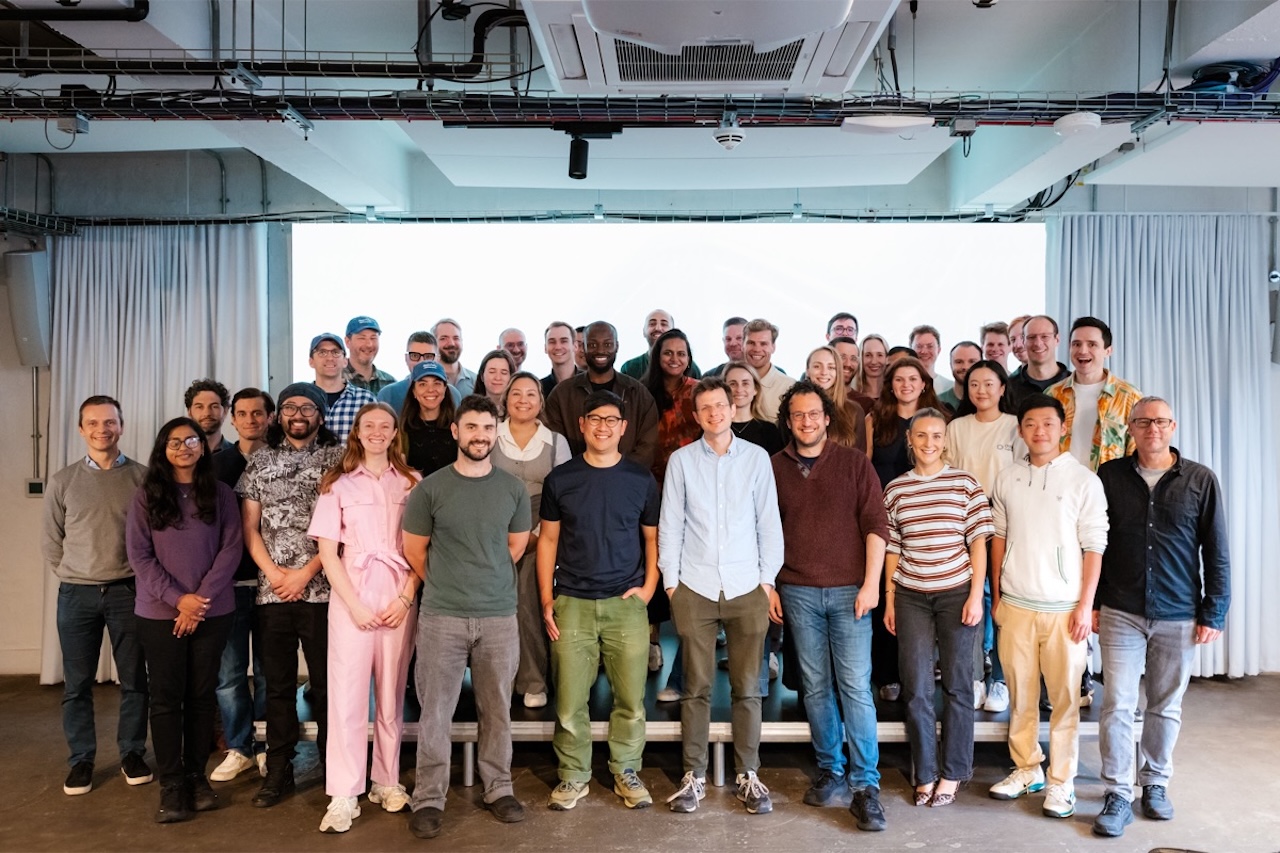
The funding has three stated uses. The first is scaling commercial deployment of Orbital’s data centre products, including both the cooling fluid system and a modular infrastructure unit. The second is expanding the engineering and AI research teams across London and San Francisco, where around 50 people currently work. The third is developing the company’s broader AI platform for applications in other industries, among them semiconductors, critical minerals, aerospace, and energy.
The modular data centre system can be deployed in as little as six months. Standard builds take up to three years. The system is manufactured off-site and delivered ready to install, which matters a great deal when demand for compute capacity is rising faster than new facilities can come online.
Orbital already has commercial partnerships in place. The company is working with AWS through a multi-year agreement to develop cooling and efficiency technologies for hyperscale facilities.
The AI Engine Behind the Products
Orbital Industries was built around the idea that materials science, engineering, and manufacturing do not have to be separate processes. By integrating them into one AI-driven system, the company aims to move from research to finished product faster than conventional industrial businesses can.
The engine that makes this possible is called Orb. It simulates the quantum mechanical behaviour of atoms, which is how scientists predict how new materials will perform before building anything physical. Traditionally, those simulations take weeks of computing time. Orb can simulate 100,000 atoms on a single GPU and runs ten times faster than the nearest alternative. Independent benchmarks show its predictions do not drift or hallucinate over time, meaning scientists can rely on results without having to constantly check the model’s work.
“…Frontier AI gives us PhD-level expertise across every discipline, meaning small, agile teams can move from materials discovery to commercial hardware in a way that simply wasn’t possible before, so what used to take a decade, we can now do in months. We’re starting with some of the most pressing challenges in data centres, but the scope of what this approach can unlock is much, much bigger.” — Jonathan Godwin, CEO of Orbital Industries
Godwin co-founded the company with CTO James Gin-Pollock, a repeat AI founder who previously sold a company to Shutterstock, and COO Daniel Miodovnik, whose background covers finance, government AI, and advisory work to the UN.
The Investors Behind the Round
Plural led the Series B. The firm is an early-stage venture fund co-founded by Ian Hogarth and Timo Daum, focused on backing founders working on hard scientific and technical problems across Europe. NVentures, the venture arm of NVIDIA, also participated alongside Radical Ventures, Compound, and Fly Ventures.


